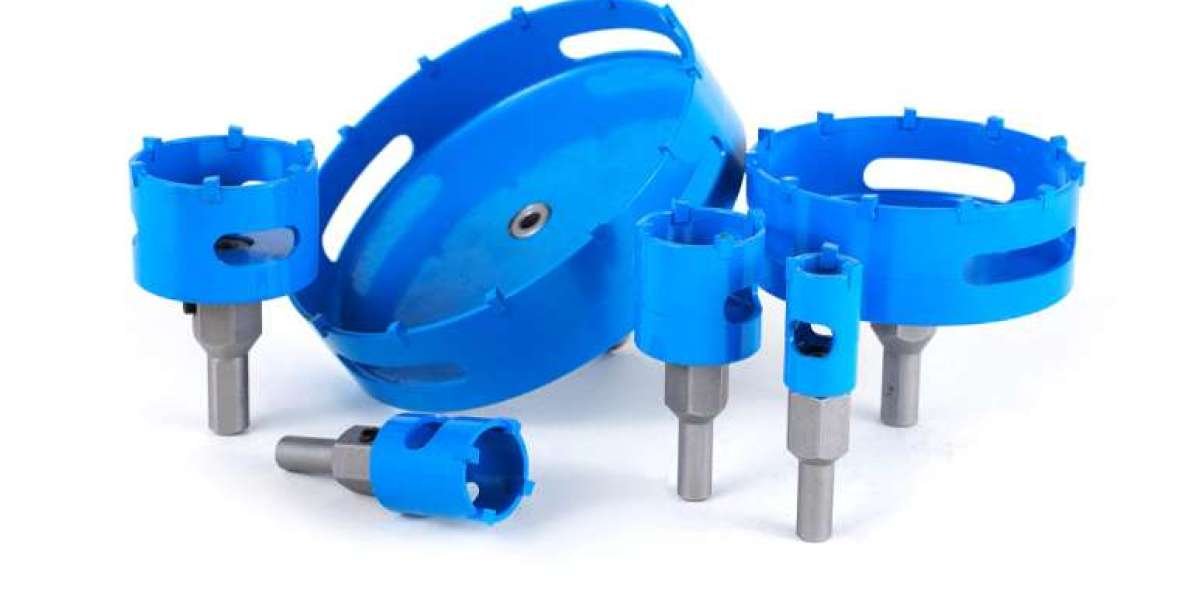

Understanding the Core Business Definition
A tile hole saw manufacturer is a specialised industrial company that designs and produces cutting tools engineered specifically for creating precise circular holes in ceramic tile, porcelain, glass, marble, granite, and other hard, brittle materials. Unlike general-purpose hole saw manufacturers, these specialists focus on the unique challenges of cutting through materials that are extremely hard yet prone to chipping and cracking. The manufacturer's expertise lies in selecting appropriate abrasives, developing bonding technologies, and engineering tooth configurations that deliver clean, accurate cuts without damaging the surrounding material. These companies serve professional tilers, contractors, stone fabricators, and tool distributors worldwide.
Specialized Product Focus
A dedicated tile hole saws manufacturer produces tools distinctly different from those used for wood or metal cutting. The product range includes diamond-grit hole saws where industrial diamonds are bonded to the cutting edge for grinding through ultra-hard materials. Tungsten-carbide grit models offer durability for ceramic and porcelain at more economical price points. Continuous rim designs provide the smoothest cuts for glass and polished stone, while segmented rims offer faster cutting for less finish-sensitive applications. Each product type requires specialized manufacturing knowledge that distinguishes these manufacturers from general cutting tool producers.
Diamond Grit Hole Saws
The premium product from any tile hole saws manufacturer is the diamond grit hole saw, where industrial-grade diamond particles are bonded to the steel cylinder's cutting edge. These diamonds, among the hardest substances known, grind through tile, stone, and glass with precision while minimizing chipping. Manufacturers use various bonding methods including electroplating, where a nickel layer physically traps diamond particles, and vacuum brazing, which creates a chemical bond between diamonds and steel for maximum retention. Diamond saws excel in wet cutting applications where water cooling prolongs life and improves cut quality, making them essential for professional stone fabrication and high-end tile installation.
Tungsten Carbide Grit Hole Saws
For cost-effective tile cutting, many tile hole saws manufacturers offer tungsten carbide grit models that balance performance and affordability. Tungsten carbide particles, while not as hard as diamond, provide excellent cutting action on ceramic and porcelain tile at significantly lower cost. The manufacturing process involves bonding carbide grit to the steel body through high-temperature sintering or specialized adhesives, creating a durable cutting surface. These saws are particularly popular among DIY users and contractors who need reliable performance without the premium cost of diamond tooling, though they may wear faster when used on extremely hard materials like porcelain.
Continuous Rim vs. Segmented Designs
The rim design of tile hole saws represents another important distinction in manufacturer product lines. Continuous rim saws feature a smooth, unbroken cutting edge that produces the finest finish on delicate materials like glass and polished marble. These require the most precise manufacturing to ensure consistent diamond distribution and edge geometry. Segmented rim designs incorporate gaps in the cutting edge that improve debris removal and cutting speed, making them suitable for thicker tiles and faster work where edge finish is slightly less critical. A quality tile hole saws manufacturer offers both types to address different application requirements.
Material Selection and Preparation
Manufacturing begins with selecting appropriate base materials that will form the saw body and cutting edge. High-quality steel cylinders are formed through deep drawing or rolling and welding processes, with wall thickness optimised for rigidity without excessive weight. The steel must be clean and free of defects that could compromise bonding. Diamond or carbide grit is carefully graded for particle size and quality, with manufacturers often using premium-grade materials for professional tools. Some manufacturers utilise advanced bonding equipment to achieve optimal attachment between abrasive particles and the steel substrate, resulting in tools engineered for optimal performance in masonry applications.