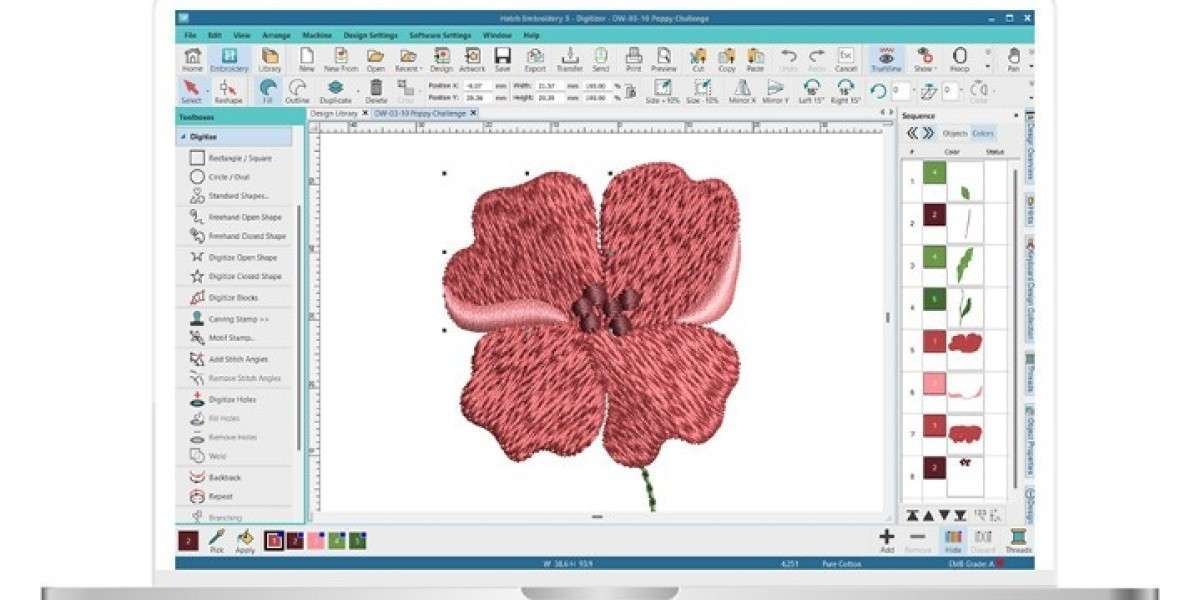

You have seen those stunning pieces of embroidery that stand alone as works of art. Delicate snowflakes, intricate doilies, beautiful ornaments that exist as thread alone with no fabric backing. This is Free Standing Lace, or FSL, and it represents some of the most magical work in the embroidery world. But here is the thing. FSL is not like stitching on a shirt. It has its own rules, its own challenges, and its own requirements. If you do not understand how to properly Digitize FSL File for Embroidery, your beautiful vision will turn into a tangled mess on your machine.
FSL embroidery creates designs that stand alone using only stitches and water-soluble stabilizer. There is no fabric to provide structure. The stitches themselves must hold everything together. This makes proper digitizing absolutely critical. Get it right, and you create magic. Get it wrong, and you waste hours of stitching time on unusable results.
Let me walk you through why digitizing for FSL is different and how to get it right.
What Makes FSL Different from Regular Embroidery
In regular embroidery, your stitches anchor into fabric. The fabric provides structure and stability. Even if the digitizing is mediocre, the fabric often holds things together enough to produce a usable result.
FSL throws that safety net away. There is no fabric. Your stitches are the structure. Every element of the design must support itself and connect to surrounding elements. The digitizing must create a cohesive network of stitches that holds together as a single unit.
When you pull the finished piece out of the hoop and dissolve the stabilizer, nothing holds it together except the stitches you digitized. If the connections are weak, the design falls apart. If the density is wrong, the design distorts. If the stitch angles are poorly planned, the design warps.
The Critical Elements of FSL Digitizing
Proper FSL digitizing focuses on several key elements that matter less in regular embroidery.
Connectivity Is Everything
In FSL, every part of your design must connect to every other part. Isolated elements float away when the stabilizer dissolves. Your digitizing must ensure that all parts of the design are physically linked through stitches.
This means planning paths that create connections between elements. It means avoiding designs with detached components unless you want separate pieces. It means thinking about how the finished piece will hold together as a unified object.
Density Must Be Just Right
Stitch density in FSL is a delicate balance. Too dense, and the design becomes stiff and board-like. It may pucker during stitching and feel harsh in the hand. Too light, and the design lacks structure. It may stretch, sag, or fall apart when the stabilizer dissolves.
The right density creates a fabric-like feel with enough body to hold its shape. It varies by design and by the look you want. Delicate lace needs lighter density. Sturdy ornaments need more substance.
Underlay Takes on New Importance
Underlay in regular embroidery stabilizes fabric and creates a foundation for top stitches. In FSL, underlay serves an additional purpose. It becomes part of the structure itself.
Proper underlay in FSL creates a grid that holds everything together. It provides stability during stitching and becomes an integral part of the finished piece. Skimping on underlay leads to weak spots that may fail later.
Stitch Angles Create Strength
The direction of your stitches affects how the finished piece hangs and drapes. Stitches running the same direction may cause the design to stretch more one way than another. Alternating angles creates balanced strength.
Think of it like weaving. Threads running in different directions interlock to create fabric strength. Your digitizing should consider this principle.
Connection Points Need Reinforcement
Where elements meet, stress concentrates. These connection points need extra attention in your digitizing. Reinforce them with additional stitches or careful pathing to prevent separation.
Think about snowflake arms meeting at the center. That center point bears stress from all directions. Proper digitizing reinforces it so the snowflake holds together.
Common FSL Digitizing Mistakes
Even experienced digitizers make errors when working with FSL. Knowing what to watch for helps you avoid them.
Isolated elements are the most common mistake. The design looks beautiful on screen, but when the stabilizer dissolves, pieces float away because nothing connects them.
Inadequate density creates weak, floppy lace that cannot hold its shape. The design may look okay coming out of the hoop but collapses when you try to display it.
Excessive density creates stiff, board-like lace that feels harsh and may not drape properly. It can also cause tension problems during stitching.
Poor connection points lead to designs that separate at stress points. The arms of a snowflake may detach from the center during handling.
Wrong stabilizer choice compounds digitizing problems. FSL requires specific water-soluble stabilizers designed to support stitches during production and dissolve cleanly afterward.
Stabilizer Considerations for FSL
The stabilizer you choose interacts directly with your digitizing. Different stabilizers have different properties that affect how your design stitches.
Water-soluble top stabilizers like Sulky Solvy or Sticky Fabri-Solvy provide a surface to stitch on and dissolve completely. Your digitizing must account for their thickness and behavior.
Water-soluble bottom stabilizers support the stitches from below. Some require hooping, others adhere with temporary adhesive.
Multiple layers sometimes work best for complex designs. Two layers of stabilizer provide more support during stitching. Your digitizing must accommodate the extra thickness.
Always test your stabilizer choice with your digitized file before committing to production runs. What works with one brand or thickness may fail with another.
Designing for FSL Success
If you are creating your own FSL designs, keep these principles in mind.
Connect everything. Before finalizing your design, trace the connections. Make sure every element links to the whole.
Think about scale. FSL designs that work at 4 inches may fail at 2 inches. Details become too small to stitch cleanly. Connections become too delicate. Digitize at your final size.
Consider the finished use. Will the piece hang? Lay flat? Be handled frequently? These factors affect density and reinforcement needs.
Simplify when possible. Elegant FSL often comes from clean, simple designs executed well, not from overwhelming complexity.
Testing: The Only Way to Know
FSL is notoriously unforgiving. What looks perfect on screen may fail when the stabilizer dissolves. Testing is not optional. It is essential.
Stitch your design on the actual stabilizer you plan to use. Use the same thread. Run the complete design. Then dissolve the stabilizer according to manufacturer instructions and evaluate the results.
Hold the finished piece. Does it have the right feel? Is it stiff enough to hold its shape? Flexible enough to drape as intended? Do any connections feel weak? Are there gaps where stitches should cover?
If anything disappoints, go back to your digitizing and adjust. Change density. Reinforce connections. Modify stitch angles. Then test again.
This iterative process separates successful FSL from frustrating failures.
When to Call in FSL Experts
FSL digitizing requires specialized knowledge that not every digitizer possesses. If you are new to FSL or working on a complex piece, consider partnering with digitizers who understand the medium.
Companies like Absolute Digitizing, Digitizing Buddy, Cool Embroidery Design, and Absolute Digitizer have experience across many embroidery types. When you discuss your FSL project, ask specifically about their experience with free-standing lace.
A good digitizer will ask questions about your intended use, your stabilizer choice, and your desired outcome. They will make recommendations based on experience. They may suggest modifications that improve results.
The Joy of Getting It Right
When you properly digitize an FSL file, the results are magical. You pull the finished piece from the hoop, dissolve the stabilizer, and watch as pure thread transforms into a beautiful object. Snowflakes that catch the light. Ornaments that hang delicately. Lace that mimics the finest textiles.
This is why we do this work. This is why proper digitizing matters. The difference between frustration and magic is in the file.
Conclusion
FSL embroidery is a special corner of our craft, capable of producing stunning results that delight and amaze. But it demands more from digitizing than standard embroidery. Connectivity, density, underlay, stitch angles, and reinforcement all take on heightened importance.
When you digitize FSL files properly, your designs stitch smoothly, hold together beautifully, and emerge from the stabilizer as cohesive works of art. When you cut corners, you waste time and materials on disappointing results.
Whether you digitize your own FSL designs or partner with experienced professionals, prioritize these elements. Connect everything. Balance density for structure without stiffness. Add proper underlay. Plan stitch angles for strength. Reinforce connection points. Test relentlessly.
Your FSL projects deserve this attention. With proper digitizing, they become the kind of embroidery that makes people stop and stare, wondering how thread alone can create such beauty.