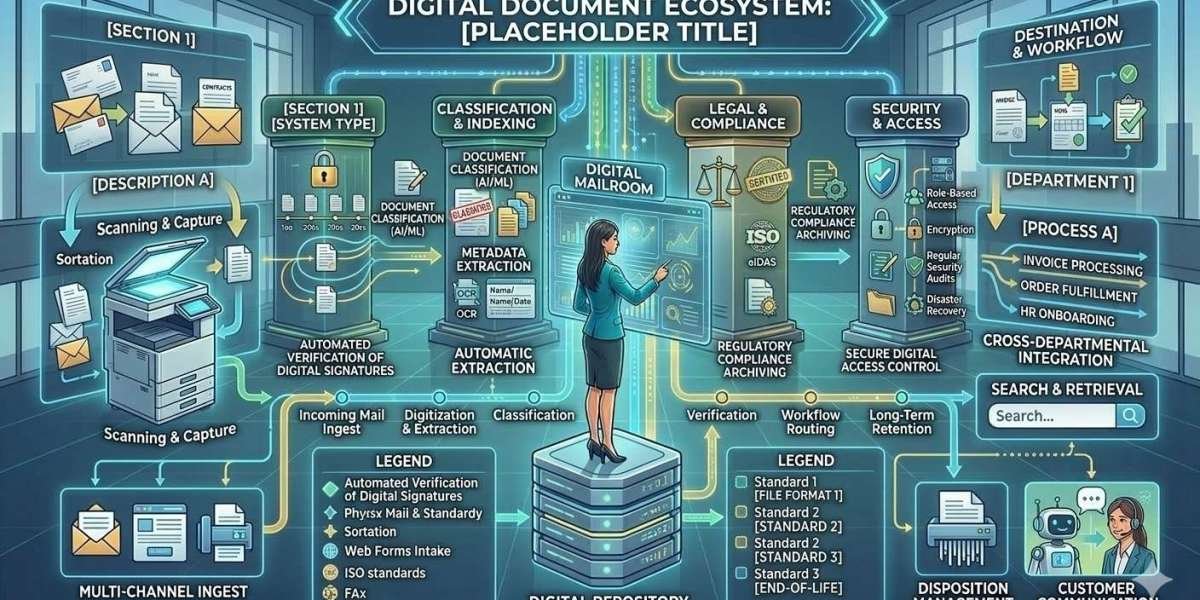

In the fast-paced world of business, managing incoming documents efficiently is crucial for maintaining smooth operations. Traditional methods of handling mail such as manually sorting physical documents, scanning them, and routing them to the appropriate departments are no longer sufficient to meet the demands of modern organizations. This is where digital mailroom systems come into play, offering a streamlined, automated solution for managing all forms of incoming documents.
Digital mailroom systems convert paper-based and electronic documents into digital formats, automatically categorizing, indexing, and routing them to the right departments or workflows. This modern approach to document handling eliminates bottlenecks, improves accessibility, and ensures compliance with data security standards. According to IDC, companies that adopt digital mailroom systems can increase operational efficiency by up to 60%. This article explores the benefits, features, and real-world applications of digital mailroom systems.
The Need for Digital Mailroom Systems
Businesses today receive a variety of documents, including invoices, contracts, correspondence, and forms, through multiple channels physical mail, email, and even mobile apps. Managing this influx of information manually can lead to delays, misfiled documents, and costly errors. Moreover, relying on paper-based systems creates security risks and consumes valuable physical space.
For example, finance teams spend a significant amount of time sorting invoices, validating payment information, and ensuring that each document reaches the right team for approval. Traditional mailrooms are inefficient and prone to human error, resulting in missed deadlines, duplicated efforts, and unnecessary costs.
Digital mailroom systems address these challenges by automating the document management process. They capture incoming documents in real-time, convert them into searchable digital formats, and route them to appropriate recipients. This eliminates the need for manual sorting, accelerates processing times, and ensures that documents are accurately indexed and securely stored.
Key Features of Digital Mailroom Systems
Digital mailroom systems offer several key features that enhance document management, reduce costs, and improve operational efficiency:
1. Automated Document Capture and Classification
Digital mailroom systems automatically capture incoming documents, whether they are physical mail (through scanning) or electronic documents (such as emails or digital forms). Optical Character Recognition (OCR) and Intelligent Document Recognition (IDR) technologies are used to extract relevant data from the documents, such as invoice numbers, dates, and customer details.
These systems can classify documents based on predefined criteria, such as document type (e.g., invoices, contracts, or customer requests) or sender information. This automated classification speeds up document processing and ensures that documents are quickly routed to the correct department or workflow.
2. Centralized Digital Repository
One of the primary benefits of digital mailroom systems is the ability to store documents in a centralized, digital repository. This ensures that all incoming documents are securely stored and easily accessible by authorized personnel. A centralized digital repository simplifies the process of searching for and retrieving documents, allowing employees to quickly locate relevant information without sifting through physical files.
This feature also improves compliance with data retention policies. Documents are automatically archived according to predefined rules, ensuring that records are stored for the required period and can be retrieved easily during audits or legal proceedings.
3. Integration with Enterprise Systems
Digital mailroom systems integrate seamlessly with existing enterprise systems such as Customer Relationship Management (CRM), Enterprise Resource Planning (ERP), and Document Management Systems (DMS). This integration ensures that extracted data from incoming documents can be transferred automatically to the appropriate systems, eliminating the need for manual data entry.
For example, an invoice received through the digital mailroom system can be automatically matched to a purchase order in the ERP system, and the payment approval process can begin without any manual intervention.
4. Security and Compliance
Given the sensitive nature of many incoming documents—such as financial records, contracts, and personal data—security is a top priority for digital mailroom systems. These systems provide advanced security features, such as encryption, role-based access control, and audit trails, to ensure that documents are handled securely and that access is restricted to authorized personnel only.
In addition, digital mailroom systems help organizations stay compliant with industry regulations and data protection laws (e.g., GDPR, HIPAA). By securely storing documents in digital formats and maintaining detailed audit logs, these systems provide a transparent and accountable way to manage incoming information.
5. Workflow Automation
Once documents are processed and classified, digital mailroom systems can trigger automated workflows that route documents to the appropriate team or department. For example, an invoice can be automatically forwarded to the finance team for approval, or a customer service request can be routed to the support team.
Workflow automation reduces the reliance on manual intervention, accelerates processing times, and ensures that documents are handled in a consistent and efficient manner. This is particularly valuable for organizations with high volumes of incoming documents, where manual processing would be time-consuming and error-prone.
Benefits of Digital Mailroom Systems
1. Increased Efficiency
By automating the document capture, classification, and routing processes, digital mailroom systems significantly reduce the time spent on manual document handling. This enables employees to focus on higher-value tasks, such as decision-making and customer service, rather than sorting through piles of paper or hunting for files.
As a result, businesses can process documents faster, reduce processing errors, and ensure that information is available when needed.
2. Cost Savings
The cost of maintaining a traditional mailroom—including the physical space, staff, and resources required for handling paper documents—can add up quickly. Digital mailroom systems help organizations save money by eliminating the need for paper storage, reducing manual labor, and accelerating document processing.
According to a study by AIIM, organizations that implement digital mailroom solutions can reduce operational costs by up to 30% by improving efficiency and reducing administrative overhead.
3. Enhanced Collaboration
With documents digitized and stored in a central, accessible location, teams across different departments can collaborate more effectively. For example, sales teams can access customer contracts in real-time, and the finance team can review invoices without waiting for physical copies to be delivered.
This seamless access to digital documents ensures that teams stay aligned and can work together more efficiently, regardless of their physical location.
4. Improved Customer Experience
By speeding up the processing of incoming documents, digital mailroom systems help organizations respond to customer requests and inquiries faster. Whether it’s processing an order, approving a payment, or addressing a customer service issue, digital mailrooms ensure that the right information reaches the right people quickly, resulting in improved customer satisfaction.
Conclusion
As organizations continue to face the challenge of managing growing volumes of incoming documents, digital mailroom systems offer a modern, efficient solution. By automating document capture, classification, and routing, these systems help businesses increase efficiency, reduce costs, and improve collaboration across departments.
With the added benefits of enhanced security, compliance, and workflow automation, digital mailroom systems are transforming how organizations handle incoming documents. In today’s fast-paced business environment, adopting digital mailroom technology is no longer optional; it's essential for maintaining competitive advantage and ensuring smooth, efficient operations.