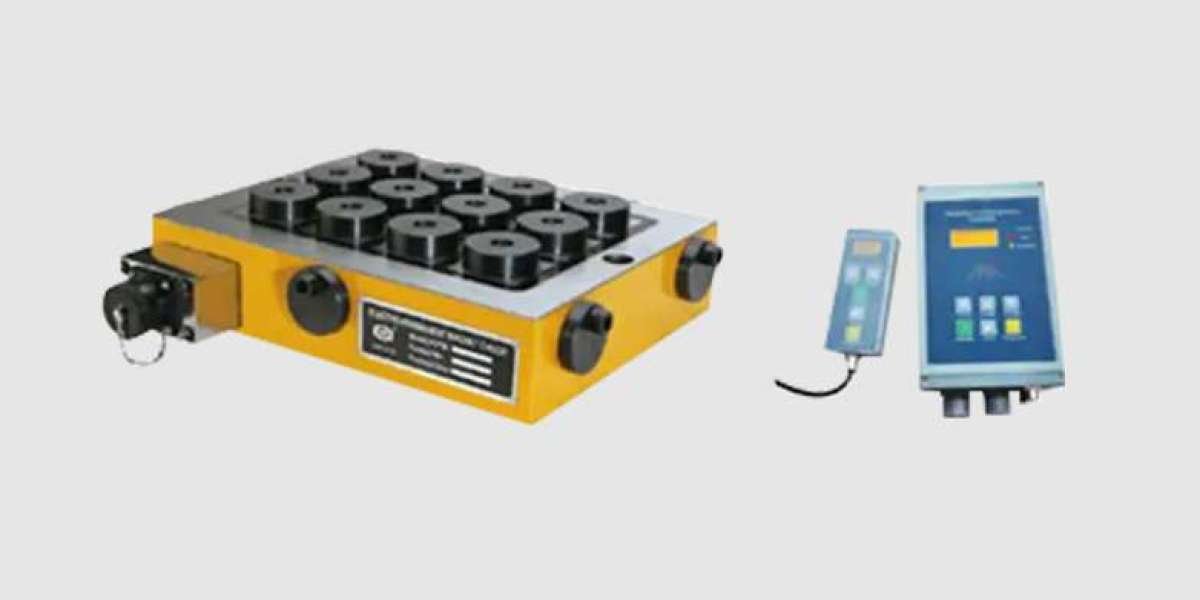

Understanding Pole Number and Pitch in Dense Permanent Magnetic Chucks
A Dense Permanent Magnetic Chuck is designed to hold ferrous workpieces securely during machining processes such as grinding, milling, and drilling. The effectiveness of such a chuck is largely determined by its magnetic pole configuration, including the number of poles and the pole pitch—the distance between adjacent magnetic poles. These factors influence how the magnetic flux is distributed across the workpiece, directly affecting the holding force, stability, and uniformity of adhesion. Understanding the relationship between pole number, pitch, and suction performance is essential for selecting or designing a magnetic chuck that meets specific machining requirements.
Pole Number and Magnetic Force Distribution
The number of magnetic poles in a chuck determines how evenly the magnetic force is applied to the workpiece surface. A higher number of poles can provide more uniform attraction across thin or irregularly shaped materials, preventing gaps where the workpiece might shift. Conversely, a lower number of poles produces stronger individual pole strength but may result in uneven distribution, especially on smaller or delicate components. Therefore, choosing the right pole number involves balancing overall magnetic force with uniformity to ensure stable and secure holding.
Pole Pitch and Contact Efficiency
Pole pitch, or the distance between adjacent poles, plays a critical role in defining the effective contact area between the magnetic chuck and the workpiece. A shorter pole pitch concentrates magnetic force in smaller regions, which enhances adhesion on thin plates but can reduce the effective holding area for thicker materials. A larger pole pitch increases the area of influence for each pole, providing better overall force coverage but potentially reducing peak local magnetic intensity. Optimizing the pole pitch is crucial to achieving both strong adhesion and uniform holding, particularly for precision machining applications.
Practical Implications for Workpiece Stability
For machining processes that require high precision, such as surface grinding or fine milling, the combination of pole number and pole pitch affects how well the workpiece remains flat and stable. An uneven magnetic field can cause the workpiece to tilt, vibrate, or shift during cutting, leading to dimensional inaccuracies or surface defects. Dense Permanent Magnetic Chucks with carefully calculated pole spacing and sufficient pole numbers ensure minimal warping and consistent contact with the workpiece, reducing machining errors and improving finished product quality.
Material and Thickness Considerations
The effectiveness of pole number and pitch also depends on the material type and thickness of the workpiece. Thicker or highly conductive metals may require fewer, stronger poles to penetrate effectively, while thin or smaller components benefit from a higher pole density to maintain uniform attraction. Additionally, workpieces with irregular or slotted surfaces may require specialized pole arrangements to maximize contact and minimize weak points. Understanding these material-specific interactions allows engineers to fine-tune chuck design for optimal adhesion performance.
The pole number and pole pitch of a Dense Permanent Magnetic Chuck are critical factors that directly influence magnetic force distribution, adhesion strength, and workpiece stability. Selecting an appropriate configuration ensures uniform holding, minimizes slippage or vibration, and enhances machining precision. By carefully considering the type, size, and thickness of the workpiece, as well as the specific machining requirements, operators can optimize the chuck’s magnetic performance for safe, efficient, and accurate material handling.