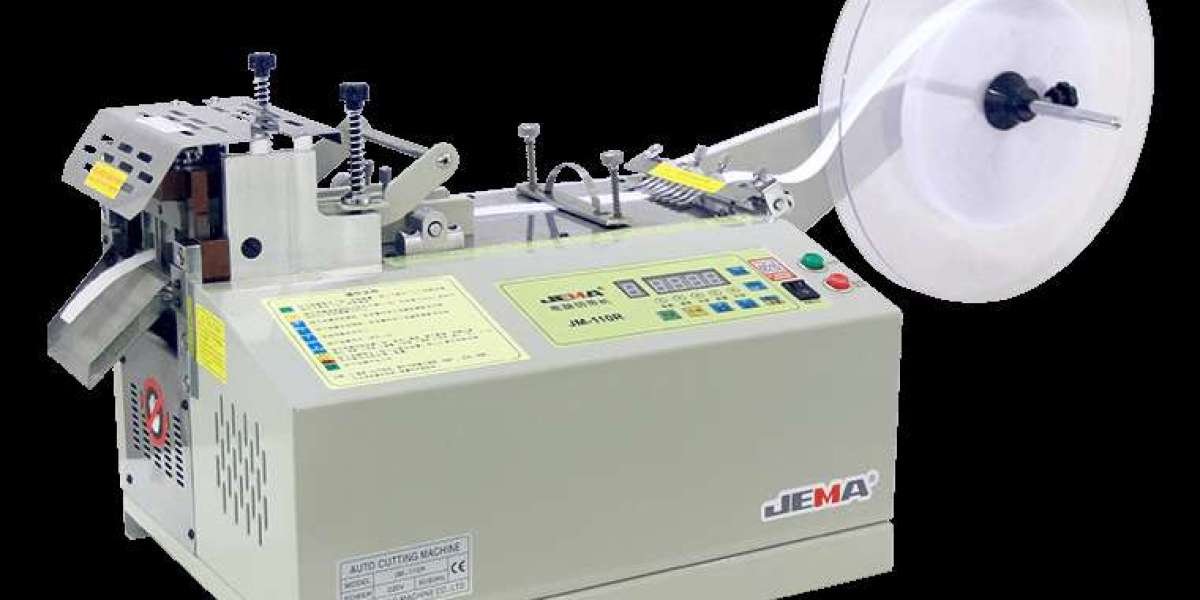

Understanding the Challenges of Cutting Elastic Materials
Improving the cutting accuracy and operating speed of an Elastic Cutting Machine begins with understanding the inherent challenges of elastic materials. Unlike rigid tapes, elastic bands stretch, retract, and deform under tension, which directly affects length accuracy and edge quality. When speed increases without proper control, these effects are amplified, often leading to inconsistent results. Therefore, performance optimization must address both material behavior and machine dynamics rather than focusing on speed alone.
Optimizing Tension Control for Stable Performance
Tension control is one of the most critical factors influencing both precision and speed. Elastic materials must be fed under stable and repeatable tension to ensure consistent cut lengths. Advanced tension regulation systems allow the machine to adapt to variations in elasticity and thickness during operation. When tension is properly managed, the material remains stable even at higher cutting speeds, reducing vibration, slippage, and length deviation. This stability enables faster operation without sacrificing accuracy.
Enhancing Feeding Systems for Smoother Operation
A well-designed feeding mechanism directly contributes to improved cutting performance. Smooth and synchronized feeding prevents sudden stretching or compression of the elastic tape before cutting. Precision rollers, servo-driven feeders, and controlled acceleration help maintain consistent material flow. When feeding is optimized, the cutting system can operate at higher speeds while maintaining reliable length control and clean cut edges.
Improving Cutting Mechanisms and Blade Technology
Cutting accuracy is closely linked to the type and condition of the cutting mechanism. Sharp, well-aligned blades reduce material deformation during cutting, resulting in cleaner edges and more consistent lengths. In some applications, heated or ultrasonic cutting methods are used to seal edges and prevent fraying. Selecting the appropriate cutting technology for the specific elastic material allows machines to operate faster while maintaining high-quality results.
Leveraging Automation and Control Systems
Modern control systems play a key role in enhancing both speed and precision. Programmable controllers enable precise synchronization between feeding and cutting actions, minimizing timing errors. Automation allows operators to fine-tune parameters such as cutting length, speed, and tension settings with high repeatability. By reducing reliance on manual adjustments, automated systems improve consistency and allow machines to reach optimal performance levels more quickly.
Reducing Mechanical Vibration and Wear
Mechanical stability is essential for maintaining accuracy at higher speeds. Excessive vibration can cause uneven cuts, blade misalignment, and premature wear of components. High-quality machine frames, balanced moving parts, and proper maintenance routines help minimize these issues. When mechanical wear is reduced, the machine can sustain higher operational speeds without compromising precision or increasing downtime.
Matching Speed Settings to Material Characteristics
Not all elastic materials respond the same way to increased cutting speed. Thicker or highly elastic tapes may require slower speeds to maintain dimensional accuracy, while thinner materials can be processed more rapidly. Understanding material-specific limits allows operators to adjust speed settings intelligently rather than pushing the machine beyond optimal conditions. This balanced approach maximizes productivity while preserving quality standards.
Training Operators for Consistent Results
Even the most advanced machine requires skilled operation to achieve peak performance. Proper training helps operators understand how adjustments in tension, speed, and cutting parameters affect final results. Experienced operators can identify early signs of inconsistency and make corrections before quality is compromised. Well-trained personnel contribute significantly to both improved efficiency and reduced material waste.
Achieving Sustainable Performance Improvements
Enhancing the accuracy and speed of an elastic cutting process is not a single adjustment but a combination of optimized tension control, feeding stability, cutting technology, automation, and operator expertise. A well-configured Elastic Cutting Machine integrates these elements to deliver consistent, high-speed performance without sacrificing quality. By focusing on system-wide optimization rather than isolated improvements, manufacturers can achieve sustainable gains in productivity and precision.