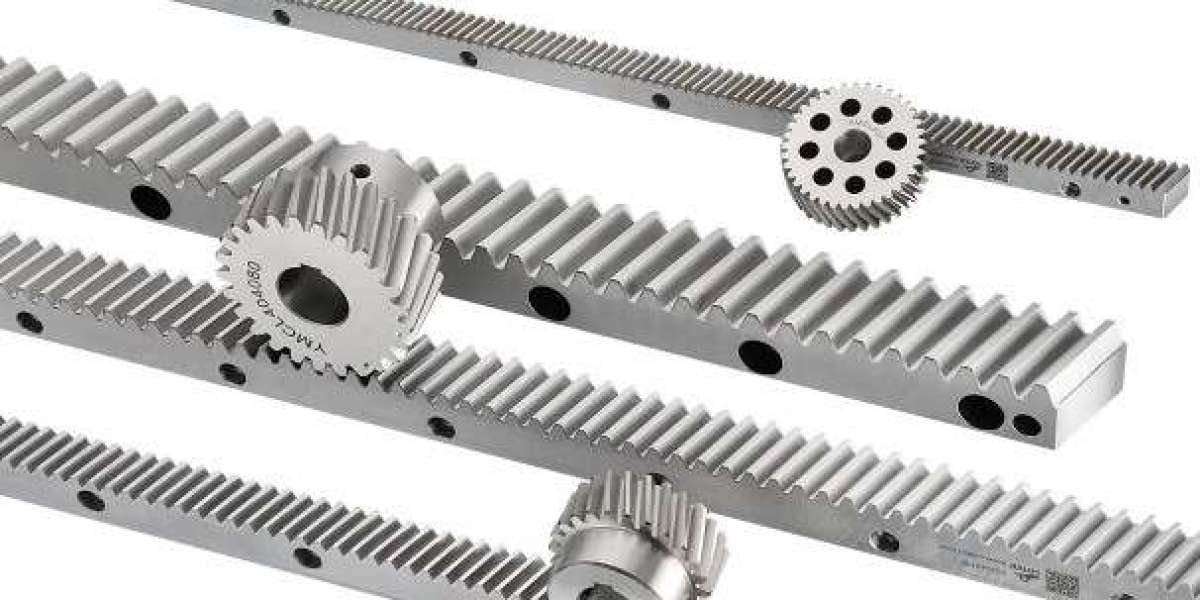

Importance of Module and Pitch
In mechanical design, choosing the correct module and pitch for a helical gear rack is crucial for ensuring smooth operation, longevity, and compatibility with mating gears. A Helical Gear Rack Factory often guides customers based on load requirements, speed, and application type. The module determines the size of the gear teeth, while the pitch defines the distance between corresponding points on adjacent teeth. Incorrect selection can lead to premature wear, excessive noise, and inefficient power transmission.
Understanding Module in Helical Gear Racks
The module is a fundamental parameter that represents the ratio between the pitch diameter and the number of teeth in a gear. It is usually expressed in millimeters and determines the overall size of the teeth. A larger module results in bigger teeth that can withstand higher loads, while a smaller module allows for more compact designs with finer teeth. When selecting a module, engineers must consider the load the gear rack will carry, the required precision, and the compatibility with the pinion gear.
Determining the Appropriate Pitch
Pitch refers to the distance between corresponding points of adjacent teeth along the pitch line. In helical gear racks, the pitch must match the mating gear’s pitch to ensure proper meshing and smooth transmission. Selecting the wrong pitch can lead to uneven tooth contact, increased wear, and vibration. Engineers typically calculate the pitch based on the desired module, gear ratio, and application requirements. Consistency between the gear rack and the pinion is essential for long-term performance.
Factors Influencing Module and Pitch Selection
Several factors influence the choice of module and pitch in helical gear racks. Load requirements play a major role, as heavier loads require larger teeth to distribute stress. Operational speed also matters; higher speeds may necessitate finer teeth to reduce vibration and noise. Environmental conditions, such as temperature and lubrication, affect material selection and tooth size. Additionally, space constraints in the machinery dictate whether a compact or oversized module is appropriate. Consulting a Helical Gear Rack Factory can help ensure that all these factors are balanced.
Practical Tips for Selection
For precise applications, selecting a module and pitch that align with standard gear sizes can simplify manufacturing and replacement. Designers should also consider the helix angle, which affects tooth contact and load distribution. When in doubt, it is better to slightly oversize the module to increase durability rather than compromise strength. Testing prototypes under real operational conditions can verify that the chosen module and pitch provide optimal performance.
Ensuring Efficient Gear Rack Performance
Choosing the right module and pitch for a helical gear rack is critical for achieving reliable, smooth, and efficient power transmission. By understanding the relationship between tooth size, load capacity, and operational requirements, engineers can select the appropriate parameters for their specific application. Proper coordination with a Helical Gear Rack Factory ensures that the gear rack meets performance, durability, and compatibility standards, reducing maintenance needs and improving overall mechanical efficiency.
Quality Grade: DIN 6
Material: S45C/42CrMo
Tooth profile: helical teeth
Right Hand Angle: 19°31'42"
Hardness treatment: high frequency quenching HRC48-52/ HRC50-55°
Production process: Ground on all sides after hardening